
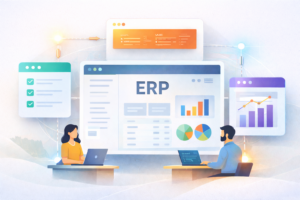
ERP systems sit at the center of business operations. Finance, sales, procurement, manufacturing, and HR all depend on one system. Over time, teams demand more speed, better interfaces, and workflows aligned with daily work. Standard ERP modules struggle to keep pace with these needs.
This gap creates friction. Users rely on spreadsheets. Teams create workarounds. Adoption drops. Decision quality suffers.
Modern businesses address this gap through ERP extensions built with custom web apps. This approach extends ERP functionality without altering the core system. It improves ERP usability while keeping stability intact. You gain flexibility without risking system upgrades or vendor support.
This article explains why web applications serve as the preferred way to build ERP extensions. You will learn how this model improves adoption, reduces risk, and supports faster innovation cycles. Let’s begin.
1. Let’s Understand ERP and the Extension Challenge
ERP stands for Enterprise Resource Planning. ERP software integrates key business functions into one system. Procurement, production, sales, HR, and finance share a single data source. Management relies on ERP reports for visibility and control.
Standard ERP systems follow generic workflows. Businesses rarely operate in generic ways. Each organization builds processes around customers, regulations, and internal culture. Teams resist changing proven workflows to fit rigid software.
Direct customization inside ERP creates long-term issues. Core modifications raise upgrade costs. Vendor updates break custom logic. Testing cycles expand. Support becomes complex.
ERP extensions solve this problem. Extensions add functionality outside the ERP core. They interact through APIs or secure data layers. Core ERP logic stays untouched.
2. Why Web Applications Suit ERP Extensions
Web applications offer flexibility by design. They operate independently of ERP code. They connect through defined interfaces. This separation reduces risk.
Key reasons businesses adopt custom web apps for ERP extensions include:
- No changes to ERP core logic
- Faster development cycles
- Better user experience
- Easier testing and deployment
- Lower long-term maintenance cost
Web apps extend ERP workflows without disrupting stability. Teams gain freedom to iterate and improve features.
3. How ERP Extensions Work With Custom Web Apps
ERP extensions using custom web apps follow a simple structure.
The ERP system remains the system of record. Data storage and transactional logic stay inside ERP. The web app handles presentation, validation, and workflow logic.
A typical flow looks like this:
- User action in web app
- Web app validates input
- Web app communicates with ERP through APIs
- ERP processes transaction
- ERP returns a response
- Web app displays outcome
This model isolates business logic. ERP remains stable. Web apps evolve quickly.
4. Improving ERP Usability Through Web Interfaces
ERP usability remains one of the largest adoption challenges. Many ERP interfaces focus on completeness over clarity. Screens grow complex. Navigation slows users down.
Custom web apps focus on specific roles. A sales executive sees sales-related tasks only.
A plant manager sees production data only.
This reduces cognitive load.
Improvements in ERP usability through web apps include:
- Simplified screens focused on one task
- Role-based access and dashboards
- Mobile-friendly access for field teams
- Faster response times for common actions
When users complete tasks faster, adoption rises. Data quality improves. Management reports reflect reality.
5. Driving Adoption Through Better User Experience
ERP adoption depends on daily behavior. Users avoid systems they dislike. Poor interfaces create shadow processes.
Custom web apps improve acceptance by aligning with how teams work. Screens follow real workflows. Validation rules prevent errors early. Notifications guide next steps.
Benefits for adoption include:
- Shorter training cycles
- Lower resistance from users
- Reduced dependency on spreadsheets
- Consistent process execution
Teams work inside one ecosystem. Managers trust ERP data again.
6. Faster Innovation Cycles Without ERP Disruption
ERP release cycles move slowly. Vendors prioritize stability. Internal changes require approvals, testing, and downtime.
Custom web apps operate on independent release cycles. Teams ship updates weekly or monthly. Feedback loops shrink.
Faster innovation cycles deliver:
- Rapid feature testing
- Faster response to regulatory changes
- Continuous improvement of workflows
- Lower experimentation cost
Business leaders gain confidence to test ideas without risking core ERP stability.
7. Supporting Custom ERP Strategies
Many businesses choose custom ERP over standard packages. One reason involves alignment with internal processes. Another involves cost control.
Custom ERP offers several advantages over standard ERP systems:
- One-time development cost instead of recurring license fees
- Software aligned with internal workflows
- No payment for unused features
- Flexibility for ongoing modifications
- Easy integration with specialized tools
- Internal IT teams build long-term capability
ERP extensions through web apps fit naturally into this strategy. They extend custom ERP functionality without creating tight coupling.
8. Web Apps as Integration Layers
Businesses rely on multiple systems. CRM, logistics platforms, analytics tools, and partner portals require access to ERP data.
Custom web apps serve as integration layers. They aggregate data from ERP and external systems. They enforce validation and access rules.
Integration benefits include:
- Controlled data exposure
- Reduced direct ERP access
- Centralized audit and logging
- Easier onboarding of partners
Security improves. Governance stays intact.
9. Security Considerations for ERP Extensions
Security remains critical when extending ERP. Web applications introduce new access points. Proper controls protect sensitive data.
Strong security practices include:
- Role-based access controls
- Secure API authentication
- Encrypted data transmission
- Audit logs for all transactions
Well-designed ERP extensions strengthen security rather than weaken it.
10. Scalability and Performance Advantages
Web applications scale independently from ERP infrastructure. High-traffic user interfaces avoid burdening ERP servers.
This separation supports:
- Peak usage handling
- Geographic access across regions
- Performance tuning without ERP impact
As businesses grow, ERP extensions grow with them.
11. Real-World Example
A manufacturing company relied on ERP for production planning. Supervisors avoided the ERP interface due to complexity. They tracked work orders in spreadsheets.
The company introduced a custom web app as an ERP extension. Supervisors used a tablet-friendly interface. The app connected directly to ERP production data.
Results included:
- Faster work order updates
- Improved data accuracy
- Higher ERP adoption
- Better production visibility
The ERP core stayed untouched. The business gained operational clarity.
12. Choosing the Right Approach for ERP Extensions
Successful ERP extensions follow clear principles:
- Keep ERP core stable
- Use APIs for communication
- Focus web apps on user roles
- Release updates frequently
- Involve end users early
This approach balances control with flexibility.
13. Why CyberMeru?
Custom software development for your business is a major decision. Software integrates most operational areas. Success depends on alignment with real workflows.
CyberMeru develops ERP extensions and custom web apps with a structured process. Stakeholders participate in each phase. Requirements reflect real operational needs.
CyberMeru respects one core belief. Software exists for businesses. Businesses should not adjust to software constraints!
CyberMeru addresses common ERP challenges:
- Poor user acceptance from generic workflows
- High license and upgrade costs
- Limited flexibility for growth
CyberMeru delivers custom ERP and ERP extensions with clear advantages:
- One-time development investment
- Processes aligned with your operations
- Freedom from unused features
- Flexible modifications over time
- Easy integration with specialized systems
- Internal team capability building
CyberMeru web applications focus on usability, scalability, and compatibility. Users access systems from any location and device. Experience remains consistent across browsers.
Why organizations choose CyberMeru:
- Technology: Advanced web development tools keep your systems modern and reliable.
- Affordable: Cost-effective solutions fit small and medium businesses without compromise.
- Expertise: Experienced consultants plan and deliver custom solutions aligned with business goals.
- Deadlines: Projects reach completion within agreed timelines. Reliability builds trust.
- Security: Strong security measures protect confidential data from intrusion.
Contact CyberMeru today to discuss ERP extensions built with custom web apps! Reduce risk. Improve ERP usability. Support faster innovation cycles with systems designed around your business.
FAQs
What problem do ERP extensions solve?
They add missing features without touching the ERP core, so teams work faster without upgrade risks.
Why use custom web apps for ERP extensions?
Custom web apps sit outside ERP, move faster to build, and improve ERP usability for daily users.
How do these extensions improve user adoption?
Simpler screens and role-focused workflows reduce friction and keep teams inside the system.

